The Hayward Genetics Center at Tulane University offers a 1-year post-baccalaureate Master of Biomedical Science Degree with a concentration in Human Genetics. The program is a multidisciplinary, interdepartmental program combining clinical genetics, biochemical genetics, molecular genetics, population genetics, and cytogenetics. The Master Degree program is designed to give graduates an in-depth understanding of the rapidly advancing field of human genetics and to prepare individuals for careers in the health sciences.
Most of the students that apply are pre-med, and while it varies from year to year, we have found that close to 90% of our graduates who apply to medical school or a school osteopathy have been accepted.
The length of the program is two semesters, starting in the fall followed by the spring semester. The degree is non- thesis: students undertake 30 hours of coursework and write an extensive paper on a subject in the field of Human Genetics. No research is required.
Further information about the Human Genetics Program can be found at the Hayward Genetics Center Website.
Thursday, 2 February 2012

Wednesday, 11 January 2012
Forefoot vs. Rearfoot Running
There has been a lot of talk out there about different running techniques and we are constantly on the look out for the most efficient gait pattern. This month Medicine and Science in Sports and Exercise, the Official Journal of The American College of Sports Medicine provided a bit more clarity.
With rearfoot running, the knee is in a straighter position when the foot hits the ground and a greater ground reaction force is carried up the leg. Forefoot running requires increased flexion at the knee at the moment of ground contact and provides a built in shock absorber.
Traumatic injuries were not significantly different in the two groups as a whole. 74% of the runners in both groups experienced a moderate or severe injury over the year.
You can find the article at :
Thursday, 5 January 2012
Why Sit Ups after Delivery May Not be a Good Idea
During pregnancy it is not uncommon for women to develop a Diastasis Recti or a separation of the stomach muscles. This can cause the abdomen to look softer and may lead to back or even abdominal pain. Traditional crunches or sit ups create more separation to this area. Women often kick into overdrive to get their bodies back into shape after delivery by doing repetitive crunches or sit ups. If correct exercise and abdominal bracing are not used, “mommy tummy” may be prolonged rather than corrected.

Your doctor or physical therapist can check to see if diastasis recti is present. The more abdominal strength women have prior to pregnancy, the less likely they are to develop the separation. It is more prevalent in women that gain more than 30 pounds during pregnancy and women that are pregnant with multiples.
Treatment for Diastasis Recti requires the use of an abdominal splint to pull the muscles together. I like and recommend to my patients the Diastasis Rehab Splint. A towel can also be used during exercise to pull the stomach muscles together.


It should be used at all times during the day especially during exercise. Limiting rotation of the trunk while you are treating the diastasis is important. Side crunches should not be performed until the diastasis is closed.
The following exercises are beneficial for reclaiming a strong core while allowing the stomach muscles to close and reattach.
Pelvic Tilts

Rotate your pelvis so that the small of your back flattens out on the surface where you are laying
Alternate arm and leg in quadruped

The hips should remain in the same position when the arms and legs are alternating. Keep your stomach tight to maintain this stability.
Plank Front
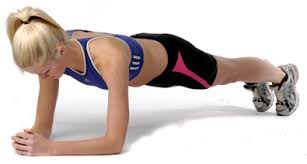
Squeeze you stomach and glutes to ensure your body remains parallel to the ground
Plank Side

Make sure your hip does not sink towards the ground
Your doctor or physical therapist can check to see if diastasis recti is present. The more abdominal strength women have prior to pregnancy, the less likely they are to develop the separation. It is more prevalent in women that gain more than 30 pounds during pregnancy and women that are pregnant with multiples.
Treatment for Diastasis Recti requires the use of an abdominal splint to pull the muscles together. I like and recommend to my patients the Diastasis Rehab Splint. A towel can also be used during exercise to pull the stomach muscles together.
It should be used at all times during the day especially during exercise. Limiting rotation of the trunk while you are treating the diastasis is important. Side crunches should not be performed until the diastasis is closed.
The following exercises are beneficial for reclaiming a strong core while allowing the stomach muscles to close and reattach.
Pelvic Tilts
Rotate your pelvis so that the small of your back flattens out on the surface where you are laying
Alternate arm and leg in quadruped
The hips should remain in the same position when the arms and legs are alternating. Keep your stomach tight to maintain this stability.
Plank Front
Squeeze you stomach and glutes to ensure your body remains parallel to the ground
Plank Side
Make sure your hip does not sink towards the ground
Wednesday, 14 December 2011
Who should do Kegels
This is a common question that I hear from patients. Most women and men can benefit from pelvic floor strengthening by performing Kegel exercises.
Women should begin pelvic floor strengthening when they are pregnant with their first child and continue to include it as part of their normal exercise program. Pregnancy and delivery are very hard on the pelvic floor muscles and structures and it is important that adequate strength is maintained to stave off pelvic organ prolapse and incontinence. Most of the women I treat for these two issues are under the age of 40.
That being said, as women age their chance of developing bladder control problems ( including urgency, frequency, and incontinence) rises and it is vitally important that post menopausal women pay attention to the strength of their pelvic floor muscles and work to build and maintain it.
It is possible for women of any age to have what many refer to as a “weak bladder” This may include leaking a little when you laugh, cough, or sneeze, urinary frequency where you urinate more than 9-10 times a day or urinary urgency where you are unable to put off going to the restroom once you have the urge to urinate. Anybody experiencing these symptoms can benefit from pelvic floor strengthening and should speak to the physician about starting a strengthening program.
Men can also benefit from improving the strength of their bladder control muscles. Because of the different design, men are less likely to develop incontinence without an underlying pathology. Incontinence after prostate cancer requiring prostatectomy is very common and kegal exercises can make a significant improvement in urinary leakage. Studies also show men suffering from erectile dysfunction due to venous compromise can correct the dysfunction by participating in a pelvic floor exercise program.
It is important that if you have bladder or urinary problems, or pain, you should speak to your doctor about initiating a pelvic floor strengthening program. You may require more specific instruction and need to see a women’s health physical therapist. Pelvic floor strengthening should also include a rest component. So if you begin with 5 second hold, a 10 second rest period should be placed after every hold.
Wednesday, 7 December 2011
The Two Exercises Every Women Should Do ( as featured on Oprah.com )
Women's health physical therapists swear these pelvic
workouts help forestall all kinds of female-specific problems.
One's a classic, and the other will forever change how you
look at your watch.
By Corrie Pikul
If you have never felt pelvic pain, a "little spritz" (thank you, Whoopi
Goldberg, for that phrase), or organ prolapse, you probably want to
keep it that way. The best strategy for shaping up "down there"? Yep,
that old standby, the Kegel. We know you've heard this before, but
that's because experts agree that Kegels are the most effective
exercise to improve the muscle tone of the pelvic floor. "After the age
of 35, we lose 5 percent of our muscle mass every 10 years," says
women's health physical therapist Kristi Latham. This reduction
occurs in muscles everywhere in the body—including those in our most
private regions. Here's a full pelvic workout, including Kegels and
"pelvic clocks."
Keep in mind: Just like you wouldn't run sprints with a sprained ankle,
you shouldn't do these exercises if you have a painful pelvic condition
(like vaginismus) without first checking with a women's health physical
therapist.

A Kegel Refresher Course
These wonder clenches can increase sexual arousal, improve your
ability to reach orgasm, help you master control of your bladder and,
says Latham, support your pelvic organs in avoiding dreaded conditions
like prolapse.Fitness instructor: Kristi Latham, PT, CLT, is the pelvic health and
lymphedema program director at Metro SportsMed Physical Therapy
in Brooklyn, New York.
Warm-up: When you're just starting out, it's best to lie down so that
you can concentrate solely on your pelvic floor.
The exercise: Squeeze the muscles around your vagina and anus.
These are the muscles you use to prevent gas from passing, stop the
flow of urine and the muscles that contract during orgasm. Think about
trying to pull the muscles up and in (if your pelvic floor is weak, you will
only faintly feel this contraction). You'll know you're doing these
exercises correctly if you feel the muscles tightening but don't have
movement in your abs or buttocks. Isolate your pelvic floor so if somebody
looked at you while you were doing the exercise, they wouldn't
think you were moving at all.
The routine: For healthy women without symptoms of pelvic floor
impairment, do the following three times per week: 5-second squeeze
followed by a 10-second rest period, 10 times, 3 times per day (30
total). With practice, you should be able to do them while sitting at your
desk or driving.
Advanced:
• Endurance training: Increase hold time and decrease rest time:
10-second squeeze followed by a 3-second rest period.
• Sprints: Add in what Latham calls "quick flicks": Squeeze and
relax 5 times, as fast as you can, followed by a 5-second rest
period. Do 30 per day, 3 times per week (as above).
• Form drills: Try any of the above routines while standing up.
Note: You've probably heard that you should practice Kegels by
stopping the flow of urine while going to the bathroom. Using Kegels
to frequently stop or slow the flow of urine can cause backflow, which
creates infection, and can also disrupt your pelvic muscle coordination.
Most WHPTs discourage practicing Kegels while urinating. Latham
suggests paying attention to how your muscles feel just after urination,
then follow up later with a Kegel to feel the difference between relaxed
and contracted.
Pelvic Clocks

These exercises can improve circulation to the pelvic organs; decrease
tightness, stiffness or congestion from prolonged sitting or standing;
increase pelvic flexibility; improve balance and—not enough for you?—
help you gain a better awareness of spinal stability.
Fitness instructor: Gail Wetzler, PT, EDO, is the owner of Wetzler Integrative
Physical Therapy Center in Newport Beach, California, and
instructor of pelvic physical health courses for the American Society
of Physical Therapists.
Warm-up: Lie on your back to be sure that the back side of the pelvis
has a full range of movement. Bend your knees and keep your feet flat
on the floor. Keep your spine in a neutral position. Imagine that there is
a clock on your lower abdomen, where 12 o'clock is at the bellybutton,
6 o'clock is at the top of the pubic bone and your hip bones are at 9
and 3.
The exercise: Bring the bellybutton down to the spine. This will make
the "clock" tilt, down at the 12 position (bellybutton) and up at the 6
(pubic bone). Move your hip and pubic bones to rotate your clock to
the side so that 3 o'clock hip is lower. Move around the clock, tilting
the pelvis until the 6 o'clock position is lowest. Continue around the
clock, hitting every number, until the 12 position is again the lowest
position. Repeat two or three times, then reverse to repeat the cycle in
the opposite direction, two or three times.
The routine: For healthy women without symptoms of pelvic floor
impairment, the clocks should be done once per day to keep the pelvic
girdle in shape. Those experiencing movement restrictions can try
these two times per day (a.m. and p.m.).
Advanced: Vary up the routine each day: Try going from 1 o'clock to
neutral, then 2 o'clock to neutral, and continuing like that around the
clock. Wetzler suggests repeating one movement, such as 4 o'clock
to 5 o'clock, five to six times "to really feel the pelvic activity."
workouts help forestall all kinds of female-specific problems.
One's a classic, and the other will forever change how you
look at your watch.
By Corrie Pikul
If you have never felt pelvic pain, a "little spritz" (thank you, Whoopi
Goldberg, for that phrase), or organ prolapse, you probably want to
keep it that way. The best strategy for shaping up "down there"? Yep,
that old standby, the Kegel. We know you've heard this before, but
that's because experts agree that Kegels are the most effective
exercise to improve the muscle tone of the pelvic floor. "After the age
of 35, we lose 5 percent of our muscle mass every 10 years," says
women's health physical therapist Kristi Latham. This reduction
occurs in muscles everywhere in the body—including those in our most
private regions. Here's a full pelvic workout, including Kegels and
"pelvic clocks."
Keep in mind: Just like you wouldn't run sprints with a sprained ankle,
you shouldn't do these exercises if you have a painful pelvic condition
(like vaginismus) without first checking with a women's health physical
therapist.
A Kegel Refresher Course
These wonder clenches can increase sexual arousal, improve your
ability to reach orgasm, help you master control of your bladder and,
says Latham, support your pelvic organs in avoiding dreaded conditions
like prolapse.Fitness instructor: Kristi Latham, PT, CLT, is the pelvic health and
lymphedema program director at Metro SportsMed Physical Therapy
in Brooklyn, New York.
Warm-up: When you're just starting out, it's best to lie down so that
you can concentrate solely on your pelvic floor.
The exercise: Squeeze the muscles around your vagina and anus.
These are the muscles you use to prevent gas from passing, stop the
flow of urine and the muscles that contract during orgasm. Think about
trying to pull the muscles up and in (if your pelvic floor is weak, you will
only faintly feel this contraction). You'll know you're doing these
exercises correctly if you feel the muscles tightening but don't have
movement in your abs or buttocks. Isolate your pelvic floor so if somebody
looked at you while you were doing the exercise, they wouldn't
think you were moving at all.
The routine: For healthy women without symptoms of pelvic floor
impairment, do the following three times per week: 5-second squeeze
followed by a 10-second rest period, 10 times, 3 times per day (30
total). With practice, you should be able to do them while sitting at your
desk or driving.
Advanced:
• Endurance training: Increase hold time and decrease rest time:
10-second squeeze followed by a 3-second rest period.
• Sprints: Add in what Latham calls "quick flicks": Squeeze and
relax 5 times, as fast as you can, followed by a 5-second rest
period. Do 30 per day, 3 times per week (as above).
• Form drills: Try any of the above routines while standing up.
Note: You've probably heard that you should practice Kegels by
stopping the flow of urine while going to the bathroom. Using Kegels
to frequently stop or slow the flow of urine can cause backflow, which
creates infection, and can also disrupt your pelvic muscle coordination.
Most WHPTs discourage practicing Kegels while urinating. Latham
suggests paying attention to how your muscles feel just after urination,
then follow up later with a Kegel to feel the difference between relaxed
and contracted.
Pelvic Clocks
These exercises can improve circulation to the pelvic organs; decrease
tightness, stiffness or congestion from prolonged sitting or standing;
increase pelvic flexibility; improve balance and—not enough for you?—
help you gain a better awareness of spinal stability.
Fitness instructor: Gail Wetzler, PT, EDO, is the owner of Wetzler Integrative
Physical Therapy Center in Newport Beach, California, and
instructor of pelvic physical health courses for the American Society
of Physical Therapists.
Warm-up: Lie on your back to be sure that the back side of the pelvis
has a full range of movement. Bend your knees and keep your feet flat
on the floor. Keep your spine in a neutral position. Imagine that there is
a clock on your lower abdomen, where 12 o'clock is at the bellybutton,
6 o'clock is at the top of the pubic bone and your hip bones are at 9
and 3.
The exercise: Bring the bellybutton down to the spine. This will make
the "clock" tilt, down at the 12 position (bellybutton) and up at the 6
(pubic bone). Move your hip and pubic bones to rotate your clock to
the side so that 3 o'clock hip is lower. Move around the clock, tilting
the pelvis until the 6 o'clock position is lowest. Continue around the
clock, hitting every number, until the 12 position is again the lowest
position. Repeat two or three times, then reverse to repeat the cycle in
the opposite direction, two or three times.
The routine: For healthy women without symptoms of pelvic floor
impairment, the clocks should be done once per day to keep the pelvic
girdle in shape. Those experiencing movement restrictions can try
these two times per day (a.m. and p.m.).
Advanced: Vary up the routine each day: Try going from 1 o'clock to
neutral, then 2 o'clock to neutral, and continuing like that around the
clock. Wetzler suggests repeating one movement, such as 4 o'clock
to 5 o'clock, five to six times "to really feel the pelvic activity."
Tuesday, 6 December 2011
Elle sweden
This morning I answered questions for readers of Elle sweden. Sofia Hedstrom is a running and fashion blogger for the site and we discussed readers questions about running injuries, pregnancy and exercise, and pelvic floor strengthening. Google will translate the blog for you. You just need to click "translate" in the top right had corner of the page. Enjoy!
http://sofiaspringer.elle.se/knipovningar/?show=comments
http://sofiaspringer.elle.se/knipovningar/?show=comments
Subscribe to:
Posts (Atom)